
special instruction early intervention
Special instruction early intervention provides crucial support for young children facing developmental challenges, fostering growth and maximizing potential through tailored programs.
What is Special Instruction Early Intervention?
Special instruction early intervention encompasses comprehensive services designed for infants and toddlers exhibiting developmental delays or disabilities. These programs, often beginning at birth, aim to address challenges in areas like cognitive, physical, communication, social, and emotional development. Timely and properly organized care prevents secondary deviations. It’s a proactive approach, utilizing therapies and educational support to enhance a child’s abilities and prepare them for future success, ultimately empowering independence.
The Importance of Early Intervention
Early intervention is fundamentally crucial as the brain undergoes rapid development in the initial years of life. Addressing developmental concerns during this period yields significantly better outcomes than waiting. It fosters cognitive skills, improves behavioral and social-emotional well-being, and enhances educational prospects. Demand currently exceeds supply, highlighting its vital role in maximizing a child’s potential and preventing long-term challenges.

Identifying Children Who Need Early Intervention
Identifying children involves developmental screenings and recognizing early warning signs, ensuring timely access to special instruction early intervention services for optimal support.
Developmental Screening Tools
Developmental screening tools are vital for pinpointing potential delays in young children, enabling early access to special instruction early intervention. These tools assess areas like communication, motor skills, cognitive abilities, and social-emotional development. Regular screenings, conducted by pediatricians or early childhood professionals, help identify children who may benefit from further evaluation. Utilizing standardized assessments ensures consistent and objective data collection, guiding appropriate intervention strategies and supporting families in navigating the process.
Recognizing Early Warning Signs
Recognizing early warning signs is crucial for initiating special instruction early intervention promptly. These signs may include delays in speech, limited eye contact, difficulty with motor skills, or a lack of social responsiveness. Parents and caregivers should be attentive to developmental milestones and consult professionals if concerns arise. Early identification allows for timely evaluation and access to appropriate support services, maximizing a child’s potential for positive outcomes and future success.

Key Components of Early Intervention Programs
Early intervention programs center around Individualized Family Service Plans (IFSPs) and Individualized Education Programs (IEPs), ensuring tailored support for each child’s needs.
Individualized Family Service Plans (IFSPs)
IFSPs are foundational to early intervention, meticulously designed for children under three demonstrating developmental delays or disabilities. These plans aren’t solely focused on the child; they recognize the family’s integral role. Developed collaboratively with parents and professionals, IFSPs outline specific goals, services—like therapy—and strategies to support the child’s development within the family context. Regular reviews ensure the plan remains relevant and effective, adapting to the child’s evolving needs and celebrating milestones achieved through consistent, family-centered support.
Individualized Education Programs (IEPs)
IEPs become central for children aged three and older who require specialized instruction. Unlike IFSPs, IEPs primarily focus on the child’s educational needs within a school setting. Developed by a team—including parents, teachers, and specialists—IEPs detail specific learning objectives, accommodations, and specialized services designed to help the child succeed academically and developmentally. Regular progress monitoring and annual reviews ensure the IEP remains aligned with the child’s evolving needs and promotes inclusive educational opportunities.

Therapeutic Approaches in Early Intervention
Therapeutic approaches, like speech, occupational, and physical therapy, are vital components, addressing specific developmental needs and promoting optimal child functioning.
Speech and Language Therapy
Speech and language therapy focuses on enhancing communication skills, addressing articulation, language comprehension, and expressive language delays. Early intervention supports children in developing foundational skills for verbal and nonverbal communication, crucial for social interaction and academic success. Therapists employ play-based activities and individualized strategies to foster language development, helping children express themselves effectively and understand others, ultimately building confidence and participation in various settings.
Occupational Therapy
Occupational therapy within early intervention concentrates on developing a child’s fine motor skills, sensory processing, and daily living skills. Therapists work to enhance self-care routines like feeding and dressing, alongside play and exploration. By adapting tasks and environments, occupational therapy promotes independence and participation in meaningful activities, fostering a child’s ability to engage fully in their world and reach developmental milestones.
Physical Therapy
Physical therapy in early intervention focuses on enhancing gross motor skills – crawling, walking, and overall movement patterns. Therapists address muscle strength, coordination, and balance, helping children overcome physical limitations and achieve developmental milestones. Interventions may include exercises, stretches, and assistive devices, promoting functional mobility and participation in age-appropriate activities, ultimately fostering independence and a higher quality of life.

Early Intervention Models
Early intervention models, like ESDM and PCIT, offer structured approaches to support children’s development, tailoring strategies to specific needs and maximizing positive outcomes.
Early Start Denver Model (ESDM) for Autism
The Early Start Denver Model (ESDM) is a comprehensive behavioral intervention specifically designed for young children diagnosed with Autism Spectrum Disorder. Research indicates its effectiveness, particularly when implemented in Russia, adapting the model to local contexts.
ESDM focuses on building social and communication skills through play-based learning, incorporating naturalistic teaching strategies. It emphasizes positive reinforcement and individualized goals, promoting cognitive and language development while addressing behavioral challenges.
Parent-Child Interaction Therapy (PCIT)
Parent-Child Interaction Therapy (PCIT) is a short-term, evidence-based intervention focusing on improving parent-child relationships and addressing behavioral issues in young children. It empowers parents with specific skills to manage challenging behaviors effectively.
PCIT utilizes live coaching, where therapists provide real-time feedback to parents during interactions with their child. This approach enhances positive reinforcement, discipline techniques, and emotional attunement, fostering a secure and nurturing bond.
The Role of Parents and Families
Parents and families are integral to early intervention success, actively participating in planning, implementing, and reinforcing therapeutic strategies at home.
Parent Training and Support
Effective early intervention necessitates robust parent training and support systems. Programs empower families with strategies to facilitate their child’s development at home, bridging therapy sessions. This includes understanding the child’s specific needs, learning techniques to promote skill acquisition, and navigating available resources. Support groups offer a valuable platform for shared experiences and emotional encouragement, fostering a collaborative approach to intervention and maximizing positive outcomes for all involved.
Home-Based Interventions
Home-based interventions are a cornerstone of effective early support, capitalizing on the natural learning environment. Therapists collaborate with families to integrate therapeutic activities into daily routines, promoting generalization of skills. This approach fosters consistent support and strengthens the parent-child bond. It’s particularly beneficial for families facing logistical challenges, ensuring continuous progress and maximizing the impact of early intervention services within the child’s familiar surroundings.

Benefits of Early Intervention
Early intervention yields significant gains in educational, cognitive, behavioral, and social-emotional development, setting a strong foundation for lifelong success and independence.
Educational and Cognitive Outcomes
Early intervention demonstrably enhances a child’s readiness for school, boosting literacy and numeracy skills. Targeted programs improve cognitive development, fostering problem-solving abilities and critical thinking. These interventions can mitigate developmental delays, leading to improved academic performance and a greater likelihood of completing secondary education. Furthermore, early support positively impacts a child’s overall learning trajectory, creating a solid base for future intellectual growth and exploration.
Behavioral and Social-Emotional Outcomes
Early intervention significantly improves a child’s social skills and emotional regulation. Programs foster positive interactions with peers and caregivers, reducing behavioral challenges. By addressing early emotional needs, interventions promote self-confidence and resilience. These benefits extend to decreased instances of anxiety and depression, leading to improved mental well-being and a greater capacity for forming healthy relationships throughout life.
Challenges in Early Intervention
Early intervention faces hurdles like lengthy waitlists, limited funding, and resource constraints, hindering timely access to vital services for children and families.
Long Waitlists and Access to Services
A significant challenge in early intervention is the consistently high demand exceeding available resources, resulting in extensive waitlists for enrollment. This delay can be detrimental, as early intervention’s effectiveness diminishes over time. Geographic limitations and disparities in service availability further complicate access, particularly for families in rural areas or with limited transportation. Addressing these systemic issues is crucial to ensure equitable and timely support for all children who need it, maximizing their developmental potential.
Funding and Resource Limitations
Securing adequate funding remains a persistent obstacle for early intervention programs. Limited financial resources directly impact the availability of qualified personnel – therapists, educators, and specialists – and restrict access to necessary materials and equipment. Insufficient funding also hinders program expansion and innovation, preventing the implementation of cutting-edge therapeutic approaches. Sustainable and increased investment is vital to strengthen early intervention infrastructure and broaden its reach.
Innovative Classroom Strategies for Early Intervention
Early intervention classrooms thrive with child-centered pedagogy and active learning, fostering engagement and development through play-based, individualized approaches to learning.
Child-Centered Pedagogy
Child-centered pedagogy prioritizes the unique needs and interests of each child within early intervention. This approach emphasizes creating a supportive and stimulating environment where learning is driven by exploration and play. Educators act as facilitators, observing and responding to individual cues, fostering independence and self-directed learning. It acknowledges that children learn best when actively involved and emotionally connected to the learning process, tailoring activities to their developmental stage and strengths.
Active Learning Strategies
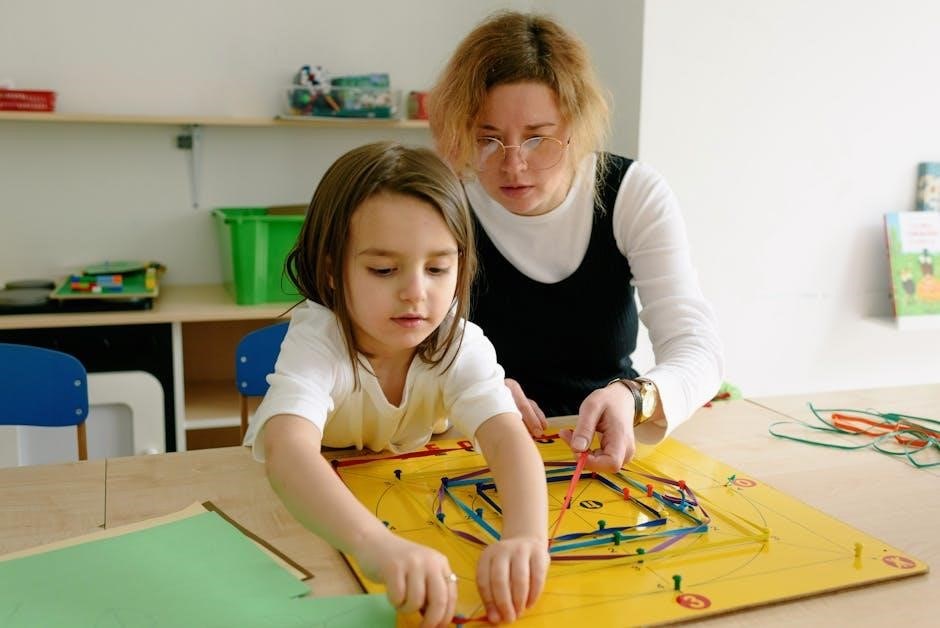
Active learning strategies are fundamental in early intervention, moving beyond passive reception of information. These techniques involve hands-on experiences, play-based learning, and collaborative activities that encourage children to actively construct knowledge. Examples include sensory exploration, building blocks, dramatic play, and interactive storytelling. This approach promotes engagement, problem-solving skills, and a deeper understanding of concepts, catering to diverse learning styles and fostering a love for learning.

Early Intervention for Specific Conditions
Early intervention adapts strategies for conditions like Down syndrome, addressing unique developmental needs and empowering children to achieve independence and success.
Down Syndrome
Early intervention is particularly essential for children diagnosed with Down syndrome, focusing on addressing a wide spectrum of developmental needs from infancy. Therapies, including speech, physical, and occupational, are crucial components, alongside specialized education and consistent family support. These combined efforts aim to foster cognitive, social, and physical development, ultimately empowering individuals with Down syndrome to reach their fullest potential and lead more independent, fulfilling lives.
Developmental Delays
Special instruction early intervention plays a vital role in supporting children experiencing developmental delays, offering targeted therapies and educational strategies. Comprehensive care, encompassing medical, therapeutic, social, and educational services, is key to preventing secondary developmental issues. Early identification and individualized plans, like IFSPs and IEPs, maximize a child’s potential, promoting positive outcomes and future success.

The Future of Early Intervention
Special instruction early intervention will be shaped by technological advancements and a push for expanded access, ensuring more children receive timely support.
Technological Advancements
Special instruction early intervention is poised for transformation through innovative technologies. Telehealth platforms expand service reach, overcoming geographical barriers and long waitlists. AI-powered tools offer personalized assessments and learning experiences, adapting to each child’s unique needs. Virtual reality simulations create engaging therapeutic environments, while wearable sensors track developmental progress. These advancements promise more efficient, accessible, and effective early intervention, ultimately improving outcomes for children and families.
Expanding Access to Services
Special instruction early intervention faces a critical challenge: demand consistently exceeds available resources, resulting in lengthy waitlists. Addressing this requires strategic expansion of services. Increased funding is vital, alongside initiatives to train more qualified professionals. Community-based programs and mobile services can reach underserved populations. Prioritizing equitable access ensures all eligible children receive timely support, maximizing their developmental potential and future success.
Legal Frameworks and Policies
Special instruction early intervention is supported by national policies and initiatives like the Early Intervention Foundation, ensuring comprehensive care for young children.
Early Intervention Foundation Initiatives
Special instruction early intervention benefits from the recently established Early Intervention Foundation, actively working to address the growing demand for services. This foundation focuses on improving access and quality of support for young children with developmental delays. Their initiatives aim to reduce lengthy waitlists and enhance coordination between various service providers, ultimately ensuring more children receive timely and effective interventions. The foundation’s work is crucial for shaping future policies and expanding resources within the field.
National Policies Supporting Early Intervention
Special instruction early intervention is bolstered by national policies designed to ensure equitable access to services for eligible children. These policies often mandate early identification through developmental screenings and provide funding for individualized programs like IFSPs and IEPs. Ongoing efforts focus on expanding these frameworks to address persistent challenges, such as resource limitations and lengthy wait times, ultimately aiming to support optimal outcomes for all young children with special needs.
Assessment of Parent-Child Interaction
Special instruction early intervention benefits from evaluating parent-child dynamics, informing tailored strategies and support to enhance the effectiveness of therapeutic approaches.
Implications for Early Intervention
Special instruction early intervention assessments of parent-child interactions directly shape intervention strategies. Understanding these dynamics allows for personalized plans addressing specific family needs and strengths. This approach enhances therapeutic outcomes, promoting positive developmental trajectories for children. Focused interventions can improve communication, responsiveness, and attachment, ultimately maximizing a child’s potential and fostering a supportive environment crucial for early success.

Research and Ongoing Studies
Special instruction early intervention research continually explores innovative strategies, like the Early Start Denver Model, and seeks to expand access to vital services.
Current Trends in Early Intervention Research
Current research in special instruction early intervention focuses on technological advancements to broaden service reach, particularly addressing long waitlists. Studies investigate the effectiveness of parent-child interaction therapies, like PCIT, and child-centered pedagogy. There’s growing emphasis on understanding the long-term impacts of early support for conditions like Down syndrome, alongside efforts to refine individualized plans (IFSPs/IEPs) and improve outcomes across educational, behavioral, and social-emotional domains.