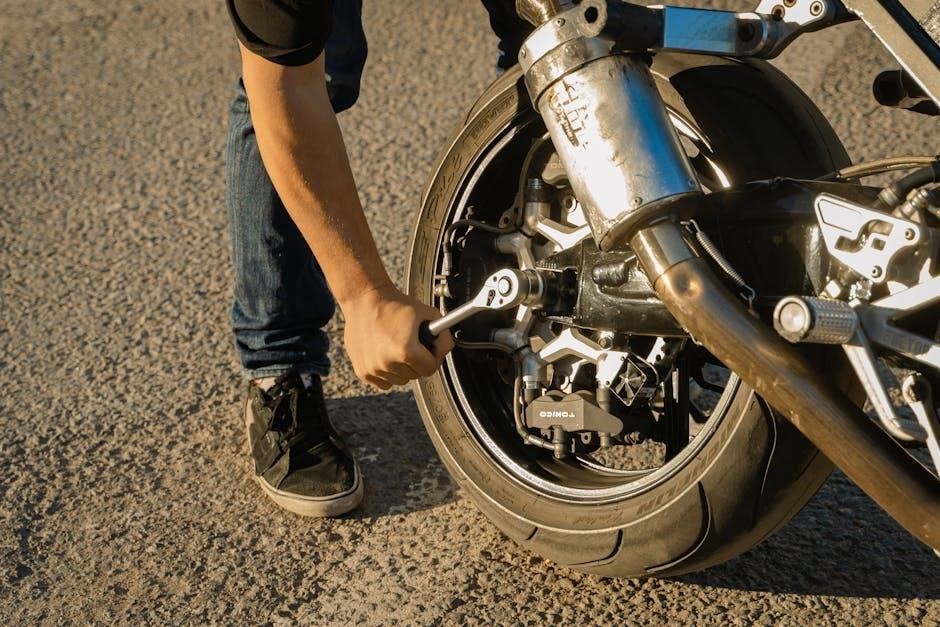
manual tire changing tools
Manual Tire Changing Tools: A Comprehensive Guide
Navigating roadside emergencies or seasonal tire swaps demands the right equipment; a well-equipped kit empowers drivers to confidently handle tire changes independently.
Essential tools range from robust jacks and lug wrenches to specialized items like bead breakers and torque wrenches‚ ensuring safe and efficient tire maintenance.
Understanding these tools‚ their proper use‚ and maintenance is crucial for any vehicle owner prioritizing safety and self-reliance on the road.
Manual tire changing‚ a fundamental skill for any vehicle owner‚ offers independence and cost savings compared to relying solely on professional services. While modern vehicles often include a basic emergency kit‚ a comprehensive understanding of the process and the appropriate tools elevates preparedness significantly. This isn’t simply about swapping a flat; it’s about understanding wheel and tire maintenance.
Historically‚ tire changes were a frequent task‚ particularly in regions with distinct seasonal weather patterns‚ like Nordic countries‚ where switching between winter and all-season tires is commonplace. The practice has evolved‚ with many now opting for dedicated wheel sets to streamline the process. However‚ knowing how to manually change a tire remains vital for unexpected situations.
This guide delves into the world of manual tire changing tools‚ providing a detailed overview of each component‚ its function‚ and how to select the best options for your vehicle and needs. From jacks and lug wrenches to specialized bead breakers and torque wrenches‚ we’ll cover everything you need to know to tackle tire changes with confidence and safety.
Safety Precautions Before You Start
Prioritizing safety is paramount when undertaking a manual tire change. Always park on a level‚ stable surface‚ away from traffic. Engage the parking brake firmly and utilize wheel chocks – crucial for preventing vehicle roll‚ especially on inclines. Never work under a vehicle supported solely by a jack; always use jack stands for secure support.
Visibility is key‚ particularly in low-light conditions. A work light ensures you can clearly see what you’re doing and avoid mistakes. Wear gloves to protect your hands from sharp edges and grime. Before loosening lug nuts‚ ensure they aren’t seized – an impact driver can assist with stubborn fasteners.
Remember to consult your vehicle’s owner’s manual for specific jacking points and torque specifications. Incorrectly tightened lug nuts can lead to wheel detachment‚ a serious safety hazard. Take a moment to assess the situation and proceed cautiously‚ avoiding rushing the process.
Essential Manual Tire Changing Tools
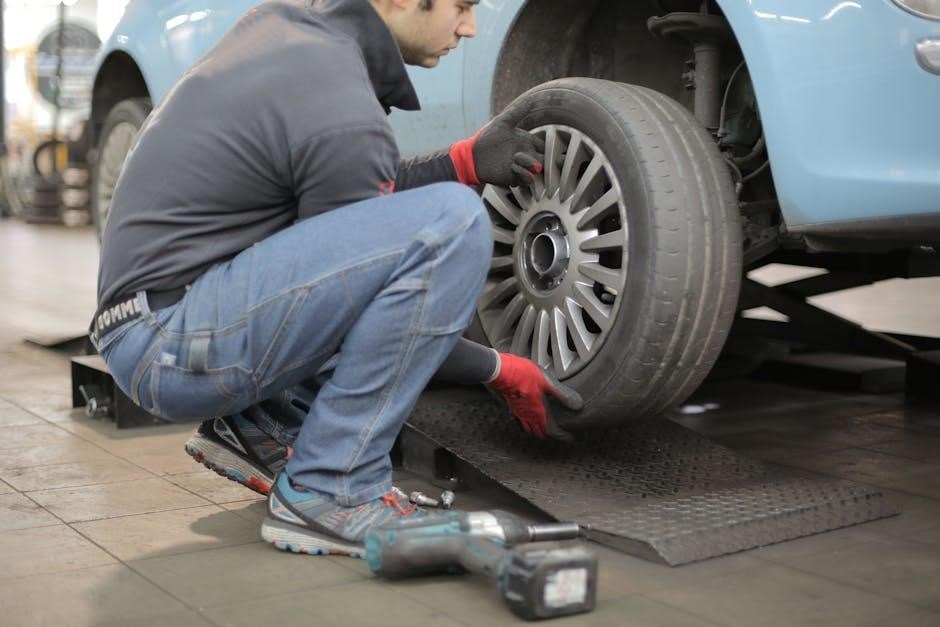
A comprehensive manual tire changing toolkit begins with a robust jack and reliable jack stands – ensuring safe vehicle elevation and support. A lug wrench‚ available in four-way or telescoping designs‚ is vital for loosening and tightening wheel nuts. Tire irons or spoons facilitate tire bead removal from the wheel.
Specialized tools like tire bead breakers simplify the often-difficult task of separating the tire from the rim. A valve core removal tool allows deflation‚ while a tire pressure gauge confirms proper inflation post-change. Don’t overlook wheel chocks for stability and gloves for hand protection.
Completing the kit requires a torque wrench for precise lug nut tightening‚ tire lube for easier mounting‚ and wheel protectors to prevent rim damage. A portable air compressor is useful for re-inflation‚ and a work light enhances visibility.
Jack and Jack Stands
The jack is the foundational tool‚ lifting the vehicle to access the wheel. Scissor jacks‚ often included with cars‚ are compact but can be slow; Bottle jacks offer greater lift with less effort‚ while floor jacks provide speed and ease of use‚ though they require more storage space.
Crucially‚ never work under a vehicle supported only by a jack. Jack stands are non-negotiable safety equipment. Position them securely under the vehicle’s frame‚ near the jack point‚ to provide stable support. Always use a pair of jack stands‚ and ensure they are rated for the vehicle’s weight.
Proper placement and locking mechanisms are vital for jack stand safety. Regularly inspect both jacks and stands for damage or wear‚ replacing them when necessary. Prioritizing quality and safety in these tools is paramount.
Lug Wrench Options
Lug wrenches are essential for loosening and tightening wheel nuts. Basic cross-lug wrenches‚ often supplied with vehicles‚ are functional but can require significant force. Stepping up‚ four-way lug wrenches (also known as spider wrenches) distribute force more effectively‚ making removal easier‚ especially for stubborn nuts.

Telescoping lug wrenches offer increased leverage through a longer handle‚ adjustable for different torque needs. This is particularly useful when dealing with over-tightened lug nuts. Impact-rated sockets‚ used with a breaker bar‚ provide even greater force‚ but require caution to avoid damage.
Regardless of the type‚ ensure the wrench fits your lug nuts precisely to prevent rounding. Using a torque wrench after initial tightening is crucial for proper wheel securing.
Four-Way Lug Wrench
The four-way lug wrench‚ often called a spider wrench‚ is a popular choice for manual tire changes due to its enhanced leverage and versatility. Its design features four sockets extending from a central hub‚ accommodating various lug nut sizes – a significant advantage for vehicles with differing wheel specifications.
This configuration distributes force more evenly‚ reducing the effort needed to break loose stubborn nuts compared to a standard cross wrench. The extended arms provide a better grip and allow for a more controlled application of pressure;
However‚ it’s crucial to select a wrench made from durable‚ high-quality steel to withstand significant torque. Always ensure a snug fit between the socket and the lug nut to prevent rounding‚ and consider using a cheater bar for extra leverage if needed.
Telescoping Lug Wrench
Telescoping lug wrenches offer a significant advantage in terms of portability and leverage adjustment. These wrenches feature a handle that extends and retracts‚ allowing the user to increase or decrease the length for optimal torque application. This adjustability is particularly useful when dealing with tightly fastened lug nuts or limited space around the wheel.
The extendable handle provides increased leverage‚ making it easier to break loose stubborn nuts without excessive force. When retracted‚ the wrench becomes more compact for convenient storage in a vehicle’s trunk or emergency kit.
When selecting a telescoping lug wrench‚ prioritize models constructed from hardened steel to ensure durability. Verify the wrench’s compatibility with your vehicle’s lug nut size and regularly inspect the locking mechanism for smooth operation.
Tire Irons and Spoons
Tire irons and spoons are indispensable tools for separating the tire bead from the wheel rim‚ a crucial step in tire removal and installation. Typically constructed from hardened steel‚ these tools are designed to pry the tire’s edge over the rim without causing damage to either component.
Tire irons generally feature a longer‚ curved shape for greater leverage‚ while spoons are shorter and more compact. Using a set of three is recommended; two to initially lift the bead and a third to work around the wheel.
Proper technique involves carefully inserting the tool between the tire and rim‚ then gently prying outwards. Avoid pinching the inner tube (if applicable) and utilize tire lube to facilitate the process. Wheel protectors are also recommended to prevent rim scratches.
Tire Bead Breakers
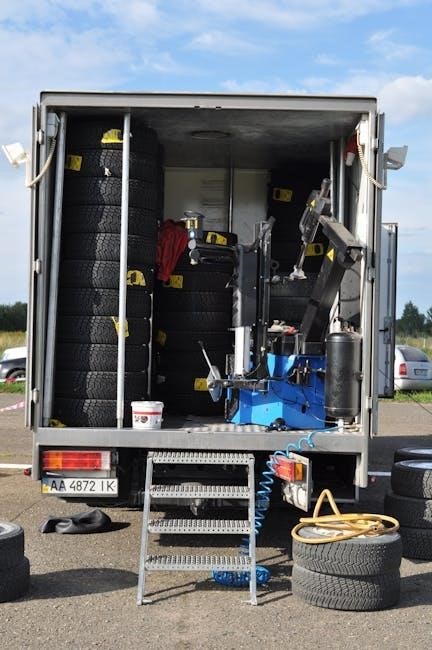
Tire bead breakers are specialized tools designed to loosen the tight seal between the tire bead and the wheel rim‚ a necessary step before removing the tire; This process can be particularly challenging with newer tires or those that have been mounted for an extended period.
Manual bead breakers typically employ a lever and head system‚ utilizing mechanical advantage to push the tire bead inward. These tools are often used in conjunction with tire irons to fully separate the bead from the rim. Some models feature adjustable heads to accommodate different wheel sizes.
Safety is paramount when using bead breakers; ensure the tool is securely positioned and avoid applying excessive force. Proper technique minimizes the risk of damage to the wheel or tire‚ and ensures a smoother tire changing experience.
Manual Bead Breakers
Manual bead breakers represent a cost-effective and portable solution for separating the tire bead from the wheel rim. These tools are favored by DIY enthusiasts and professionals alike‚ offering a balance of affordability and functionality.
Typically constructed from hardened steel‚ manual bead breakers utilize a lever arm and a contoured head to apply focused pressure to the tire bead. The operator uses downward force on the lever‚ effectively breaking the seal between the tire and the wheel.
Variations exist‚ including those with adjustable heads to accommodate various wheel diameters; Proper usage involves positioning the breaker head correctly and applying steady‚ controlled pressure. While requiring physical effort‚ manual bead breakers provide reliable performance for most tire changing tasks.
Valve Core Removal Tools
Valve core removal tools are indispensable for deflating tires quickly and efficiently before removal from the wheel. These small‚ yet crucial‚ tools allow access to the valve core‚ enabling rapid air release.

Commonly‚ these tools feature a dual-ended design: one end for removing the valve core‚ and the other for tightening or reinstalling it. The removal end typically incorporates a pin or hook that engages with the valve core’s internal mechanism.
Using a valve core removal tool significantly speeds up the tire changing process‚ preventing the need to wait for air to escape slowly through the valve stem. They are inexpensive‚ durable‚ and a vital component of any comprehensive tire changing kit‚ ensuring a controlled deflation process.
Tire Pressure Gauges
Accurate tire pressure is paramount for safety‚ fuel efficiency‚ and tire longevity‚ making a reliable tire pressure gauge an essential tool. Gauges come in various types‚ including pencil‚ dial‚ and digital models‚ each offering different levels of precision and ease of use.
Pencil gauges are compact and affordable‚ while dial gauges provide a more precise reading and are less susceptible to damage. Digital gauges offer the convenience of a clear‚ backlit display and often include additional features like memory recall.
Regularly checking and adjusting tire pressure – both during tire changes and as part of routine vehicle maintenance – ensures optimal performance and prevents premature wear. A quality gauge is a small investment with significant returns in safety and cost savings.
Wheel Chocks: Ensuring Vehicle Stability
Prioritizing safety during a tire change begins with securing the vehicle‚ and wheel chocks are indispensable for this purpose. These simple yet vital tools prevent unwanted movement‚ especially on inclines or uneven surfaces‚ minimizing the risk of rollaway and potential injury.
Wheel chocks are typically made from durable materials like plastic or metal and are designed to wedge firmly against the tires‚ immobilizing the vehicle. It’s crucial to use chocks on both the front and rear wheels of the vehicle‚ on the opposite side of the tire being changed.
Investing in a high-quality set of wheel chocks is a small price to pay for the peace of mind and enhanced safety they provide during roadside repairs or maintenance. Never compromise on vehicle stability!
Gloves for Hand Protection
Protecting your hands is paramount when tackling a tire change‚ and a good pair of gloves is an essential component of any manual tire changing kit. The process often involves grappling with dirty‚ greasy components and potentially sharp edges‚ making hand protection crucial.
Work gloves provide a barrier against abrasions‚ cuts‚ and chemical exposure from tire lubricants or cleaning agents. They also enhance grip‚ allowing for a more secure hold on tools like lug wrenches and tire irons. Consider gloves made from durable materials like leather or reinforced synthetic fabrics.
Beyond physical protection‚ gloves maintain hygiene‚ preventing grime and contaminants from embedding themselves in your skin. A comfortable‚ well-fitting pair of gloves will significantly improve your experience and safety during the tire changing process.
Work Light for Visibility

Adequate illumination is often overlooked‚ yet it’s a critical safety factor when changing a tire‚ especially in low-light conditions or at night. A dedicated work light dramatically improves visibility‚ allowing you to clearly see the lug nuts‚ jack points‚ and surrounding area.
Choose a work light that’s portable and provides bright‚ focused illumination. LED work lights are an excellent option due to their energy efficiency‚ durability‚ and long lifespan. Consider features like adjustable brightness settings and a magnetic base for convenient attachment to vehicle surfaces.
Proper lighting minimizes the risk of mistakes‚ ensures accurate tool placement‚ and enhances overall safety during the tire changing process. Don’t rely solely on ambient light; a work light is a small investment that yields significant benefits.
Torque Wrench: Importance and Types
Properly tightening lug nuts is paramount for wheel safety; under-tightening can lead to wheel detachment‚ while over-tightening can damage studs or warp rotors. A torque wrench ensures lug nuts are tightened to the vehicle manufacturer’s specified torque‚ preventing these hazards.
Two primary types dominate the market: click-type and beam-type. Click-type wrenches offer audible and tactile feedback when the desired torque is reached‚ providing precision and ease of use. Beam-type wrenches display torque via a pointer on a scale‚ requiring more visual monitoring.

Investing in a quality torque wrench is crucial. Regularly calibrate it to maintain accuracy. Always consult your vehicle’s owner’s manual for the correct torque specifications for your wheels.
Click-Type Torque Wrench
Click-type torque wrenches are favored for their user-friendly operation and precision. These wrenches allow you to pre-set the desired torque value‚ and once reached during tightening‚ they emit an audible “click” and a slight release of tension. This provides clear indication to stop applying force‚ preventing over-tightening.
They typically feature a square drive head to accommodate various socket sizes. Adjustment mechanisms vary‚ ranging from simple screw-type adjustments to more sophisticated lever-style settings. Digital click-type wrenches offer even greater accuracy and features like multiple unit measurements.
Regular calibration is vital for maintaining accuracy. Store the wrench at its lowest setting to preserve the internal spring. These wrenches are a reliable choice for both novice and experienced mechanics.
Beam-Type Torque Wrench
Beam-type torque wrenches represent a simpler‚ more affordable option compared to click-type models. They consist of a long beam with a torque scale‚ and a pointer indicates the applied torque as you tighten the fastener. Visual monitoring of the scale is crucial to achieve the correct torque.
These wrenches don’t offer the tactile feedback of a click-type‚ requiring careful observation to avoid over-tightening. They are generally less precise‚ making them suitable for less critical applications‚ but still effective for wheel lug nuts with practice.
Beam wrenches are durable and don’t require calibration as frequently as click-type wrenches. However‚ accurate readings depend on a clear view of the scale during use. They are a dependable‚ budget-friendly choice for basic torque applications.
Tire Lube and Applicators
Tire lube is an indispensable component of manual tire changing‚ significantly easing the mounting and dismounting process. It reduces friction between the tire bead and the wheel‚ allowing for smoother installation and removal‚ preventing damage to both components.
Available in both liquid and paste forms‚ tire lube minimizes the force needed‚ reducing the risk of straining tools or the wheel itself. Paste lubes offer a thicker consistency‚ ideal for stubborn tires‚ while liquids provide broader coverage.
Applicators‚ such as brushes or specialized spray bottles‚ ensure even distribution of the lube around the tire bead. Proper application is key; avoid excessive amounts that could compromise tire balance. Investing in quality lube and an effective applicator streamlines the entire process.
Wheel Protectors: Preventing Damage
Protecting your wheels from scratches and damage during tire changes is paramount‚ and wheel protectors are specifically designed for this purpose. These protectors‚ often made from durable plastic‚ create a barrier between the tire changing tools – particularly tire irons – and the wheel’s finish.
Available in various designs‚ including rim guards and full wheel covers‚ they shield against scuffs‚ gouges‚ and other cosmetic imperfections. Using wheel protectors demonstrates a commitment to maintaining the aesthetic appeal and resale value of your wheels.
Installation is typically straightforward‚ simply clipping or fitting the protectors onto the wheel rim before commencing the tire change. They are a small investment that can save you significant costs associated with wheel repair or replacement‚ ensuring a professional result.
Impact Driver for Stubborn Lug Nuts
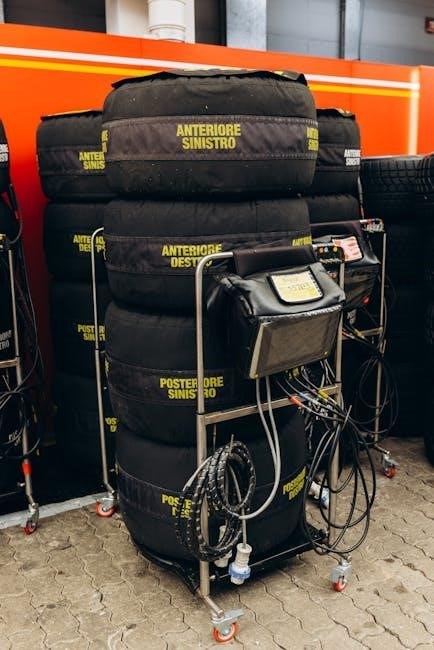
Encountering rusted or overly tightened lug nuts is a common frustration during tire changes. An impact driver provides the necessary leverage and rotational force to break free these stubborn fasteners‚ preventing rounded edges or potential damage to the lug nuts themselves.
Unlike standard wrenches‚ impact drivers deliver concentrated bursts of torque‚ effectively loosening even the most resistant nuts. These tools are particularly useful for vehicles that haven’t had wheel changes in a long time or have been exposed to harsh weather conditions.
Manual impact drivers require a hammer strike to generate the rotational force‚ offering a powerful solution without the need for compressed air or electricity. Investing in a quality impact driver is a smart move for anyone regularly performing tire maintenance.
Portable Air Compressor (for re-inflation)
After mounting the tire‚ proper inflation is paramount for safety and optimal performance. A portable air compressor allows you to restore the tire to the manufacturer’s recommended pressure‚ ensuring a safe and comfortable ride. These compressors are typically powered by your vehicle’s 12V outlet‚ making them convenient for roadside use.
Choosing a compressor with a built-in pressure gauge is crucial for accurate inflation. Some models also include features like automatic shut-off‚ preventing overinflation. Regularly checking tire pressure‚ even outside of tire changes‚ is a vital maintenance practice.
Having a portable air compressor in your tire changing kit provides peace of mind‚ allowing you to address underinflated tires promptly and maintain optimal handling and fuel efficiency.
Emergency Roadside Tire Changing Kit Contents
A comprehensive emergency kit is vital for safe and efficient tire changes. Essential components include a jack‚ lug wrench‚ and owner’s manual for proper jacking points. Wheel chocks are crucial for vehicle stability‚ preventing unwanted movement during the process.
Gloves protect your hands‚ while a work light enhances visibility in low-light conditions. Don’t forget a tire pressure gauge to ensure correct inflation post-change. A torque wrench is critical for tightening lug nuts to the manufacturer’s specification‚ preventing wheel detachment.
Consider including tire lube for easier mounting‚ wheel protectors to prevent damage‚ and a portable air compressor. Finally‚ a reflective safety vest increases your visibility to other drivers‚ ensuring a safer roadside experience.
Choosing the Right Tools for Your Vehicle

Selecting appropriate tools hinges on your vehicle’s specifications. Consider the lug nut size and torque requirements; a universal lug wrench might suffice for some‚ while others demand a specific socket size. Vehicle weight dictates jack capacity – ensure it exceeds your vehicle’s weight for safe lifting.
If you frequently swap wheels‚ investing in a telescoping lug wrench offers extended reach and leverage. For vehicles with alloy wheels‚ wheel protectors are essential to prevent scratching. A click-type torque wrench provides precise tightening‚ crucial for alloy wheels.
Ultimately‚ prioritize quality and compatibility. A well-chosen kit tailored to your vehicle ensures efficient‚ safe tire changes‚ minimizing risks and maximizing convenience on the road.
Maintaining Your Tire Changing Tools
Regular maintenance extends the lifespan and reliability of your tire changing tools. After each use‚ thoroughly clean tools‚ removing dirt‚ debris‚ and tire lube. Inspect the jack for any signs of damage‚ corrosion‚ or leaks; lubricate moving parts as needed.
Lug wrenches should be checked for stripped sockets or bent handles. Torque wrenches require periodic calibration to ensure accuracy – a miscalibrated wrench can lead to over or under-tightened lug nuts. Store tools in a dry‚ protected environment to prevent rust and corrosion.
Proper storage and consistent cleaning are vital. A well-maintained kit guarantees readiness for emergencies and ensures safe‚ efficient tire changes for years to come.
Advanced Techniques: Mounting and Balancing
Beyond basic changes‚ mounting and balancing tires require finesse. Lubrication is key – applying tire lube generously to the bead and rim facilitates easier mounting‚ preventing damage. Utilizing tire irons strategically minimizes effort and risk of pinching the tube (if applicable).
Achieving proper balance is crucial for ride quality and tire longevity. While professional balancing is recommended‚ static balancing can be approximated with a simple stand and observation. Identifying high spots and rotating the tire on the wheel helps distribute weight more evenly.
Remember‚ these techniques demand practice and caution. Improper mounting or balancing can lead to vibrations‚ uneven wear‚ and compromised safety; consider professional assistance for optimal results.
Resources for Further Learning
Expanding your knowledge beyond this guide is highly encouraged. Online communities like r/askcarguys on Reddit offer valuable insights and practical advice from experienced enthusiasts‚ discussing everything from tool recommendations to seasonal tire strategies.
Websites specializing in automotive tools‚ such as ShopEquipmentParts.com‚ provide detailed information on specific equipment – from tire changers and bead breakers to essential parts and accessories. Blogs and articles from automotive experts‚ like Andrew P. Collins‚ offer step-by-step guides and nuanced techniques.

YouTube channels dedicated to car maintenance showcase visual demonstrations of tire changing procedures‚ enhancing understanding. Always cross-reference information and prioritize safety when applying new techniques learned from external resources.